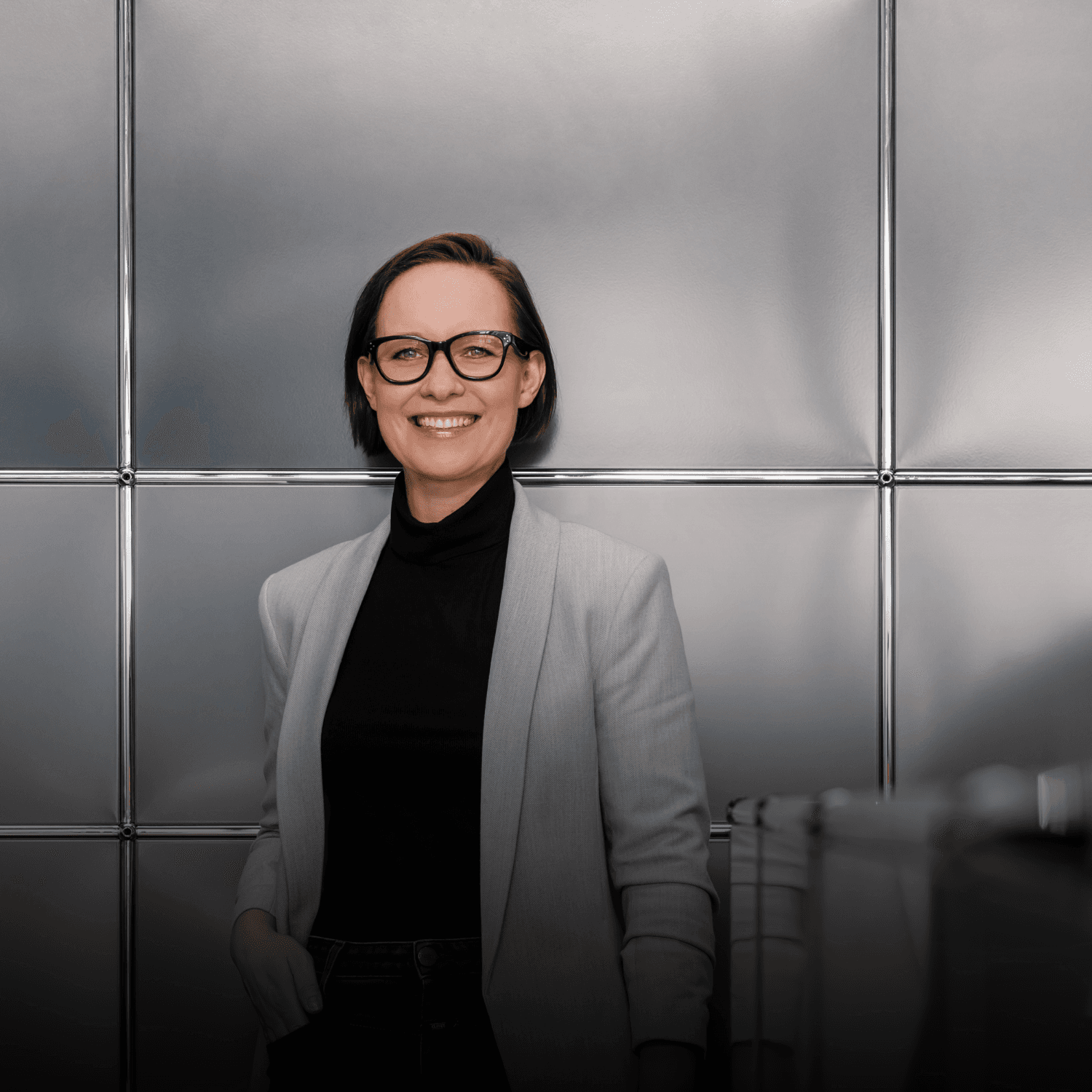
Katharina Janku studied art history, spent time at the Städel. Today she is Co-CEO of one of design's most enduring icons. On what a classic actually requires and why restraint is the hardest discipline of all.
There is a line Katharina Janku has carried with her since her days as an intern at the Städel Museum in Frankfurt. Her manager Inka said it during a turbulent campaign: I'll stick my neck out. You make sure it stays on. It was said with trust, not threat. It has shaped everything about how she leads. As Co-CEO of USM Germany and Global Head of HR for the entire USM Group, she now carries the same weight that was once carried for her.
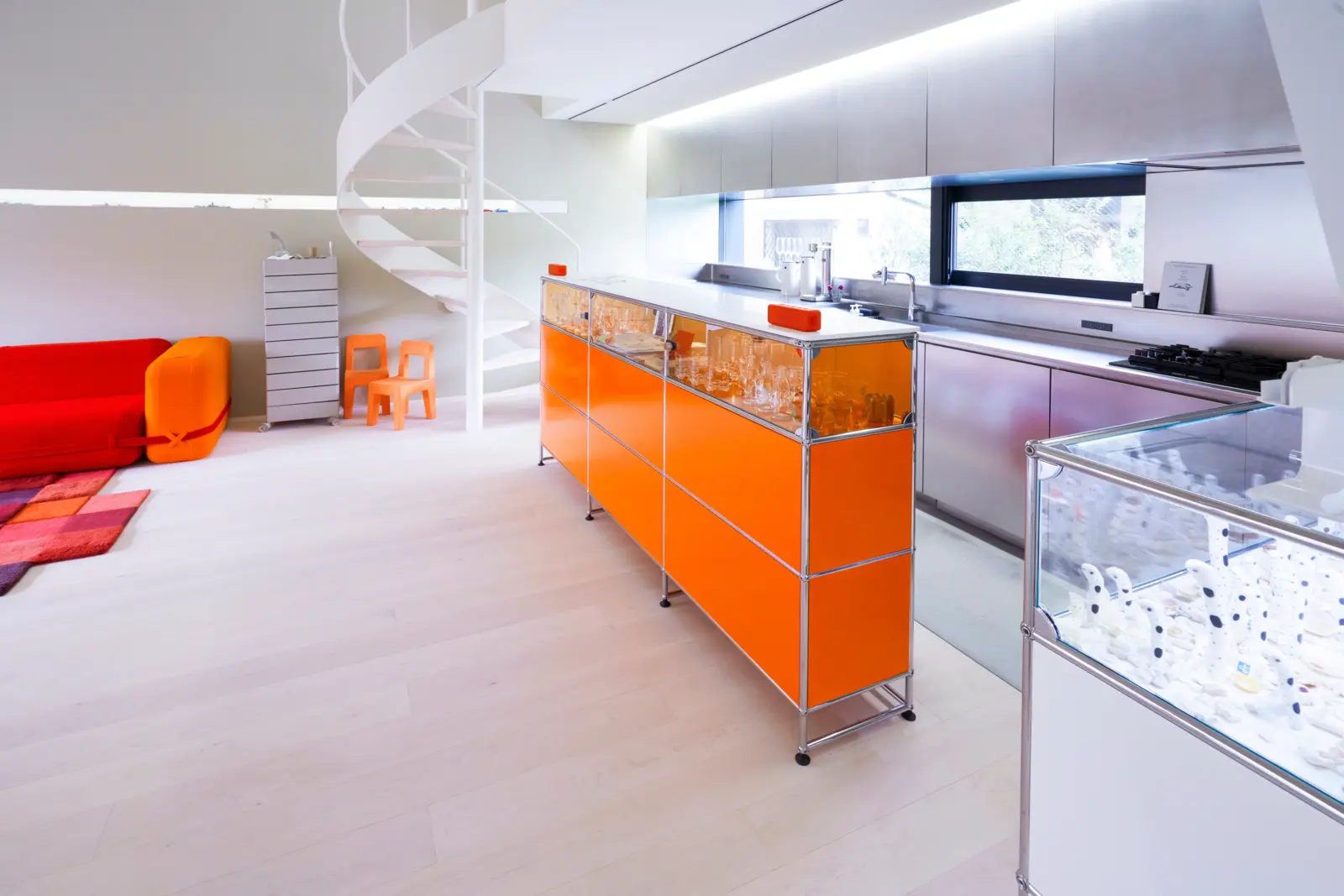
Terada House © USM Haller (usm.com)
A Long Way Round
She started at sixteen, with a careers programme internship at the Kunsthalle Mannheim. She liked it enough to study art history. After university came a job at the Städel Museum in Frankfurt, then an educational services company, then a marketing team leader role at USM in 2016. A decade later she runs the company.
"I can honestly say that with my late twenties approaching, I had no idea I'd end up in a role like this." She completed an Executive MBA along the way, picking up the business fundamentals she knew she was missing. Since 2022 she has been Co-CEO of USM Germany alongside Thomas Villiers. Since 2024 she has also carried worldwide responsibility for HR across the group. Two very different hats, she calls them. Both require the same underlying quality: an insatiable curiosity about things you don't yet understand.
What she's had to unlearn is harder to name. She is, by her own description, a "doer." Someone who wants to be inside the work, not above it. "There are so many beautiful topics," she says. "I am genuinely glad my colleagues get to work on them." Marketing campaigns, negotiations, partnerships coming to life. In a CEO role, you watch most of that happen from a distance. Learning when to step back, and accepting that it is actually the right thing. That, she says, is the ongoing lesson.
An Accidental Icon
USM began in 1885 as a locksmith's workshop in Münsingen, a small town near Bern in Switzerland. The company makes steel furniture now, but for most of its history it made window fittings and metal components. What it has always been, she says, is extraordinarily precise with metal: cutting steel tubes, bending sheet metal, powder-coating at a level of accuracy very few manufacturers can match. That precision is still the core.
The furniture system was, famously, an accident. In 1965, the owner Paul Schärer and the architect Fritz Haller were expanding the company premises. They built a glass and steel pavilion, modernist and minimal. At some point they looked at the wooden roller cabinets they had and decided those simply wouldn't do. So they built their own. The patent for the ball-and-tube connector was filed in August of that year. USM is celebrating sixty years of it in 2025.
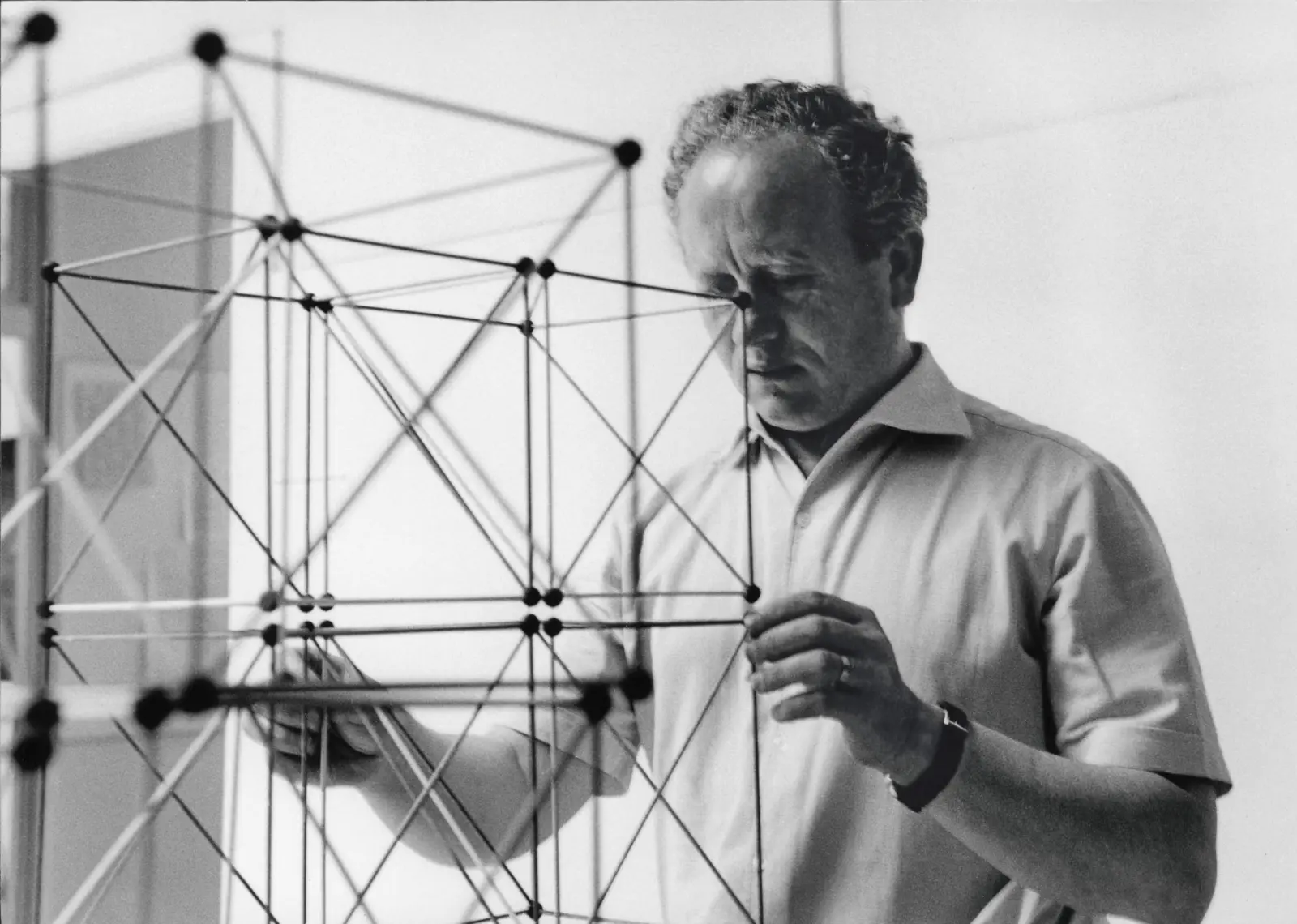
Fritz Haller © USM Haller (usm.com)
"It was never a plan," Katharina says. "It was two people who worked together very well and gave themselves permission to say: let's just build the furniture ourselves." She finds something instructive in that. The best things sometimes come from giving creative people enough freedom to follow a thought to its end.
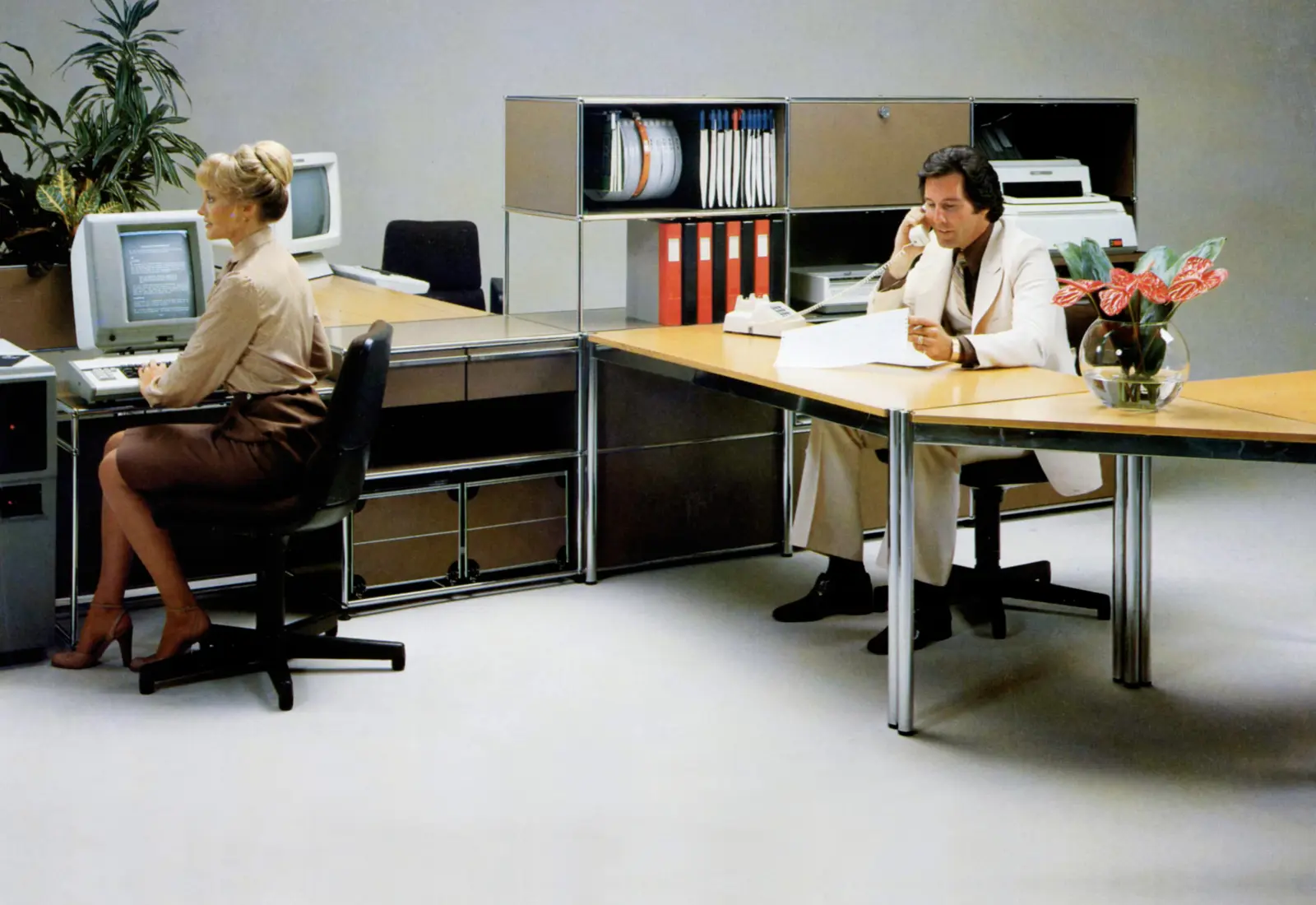
For decades, USM was almost exclusively associated with professional environments: the lawyer's office, the doctor's office, the corporate reception. The shift toward the home came gradually, accelerating around the brand's fiftieth anniversary in 2015 with a campaign called "Make It Yours". When Katharina joined the following year, one of her early initiatives was working with content creators (influencers, as they were still called then) to make the brand feel less institutional. The audience has visibly gotten younger. USM is now on TikTok, which they resisted for a long time, and the engagement surprised even them.
The originality question is real: copies circulate online, and USM has had to be deliberate about standing for the original. You can't leave the field to others and not show up yourself, she says. That's a mistake you can't afford to make.
© USM Haller (usm.com)
What a Classic Actually Is
Ask Katharina what makes a design icon and she gives an answer that sounds simple and isn't: restraint.
"Everything it doesn't need must not be there. Then it becomes kitsch." Recognition value matters: form, material, colour that stays in the eye. Quality is essential. But the hardest thing, the thing that distinguishes a genuine classic from a merely well-designed object, is the courage to leave things out. Permanently, repeatedly, under commercial pressure, in meetings where someone always wants to add something.
"Being a design icon means restraint. An enormous amount of restraint." She describes the internal conversations at USM as an ongoing iterative discipline. Is this needed? Does this belong? Are we improving something or just adding to it? The system is backwards-compatible: what was made in 1965 still connects with what is made today. That imposes a rigour that she finds clarifying rather than limiting.
She is also clear that not everyone loves USM, and that that's ok. "I think you need edges, you need a clear character, to establish yourself as something real. A classic that everyone likes is probably not a classic at all."
On sustainability, she makes a similar argument. USM doesn't position it as a destination they're moving toward. The product is circular by nature. You buy it once. You reconfigure it. You pass it on. The company has a second-hand partner network in Germany, an Academy that trains dealers to work with the system properly, and was the first furniture manufacturer to commit to Science Based Targets. "We were always already doing it," she says. "Articulating it just took longer."
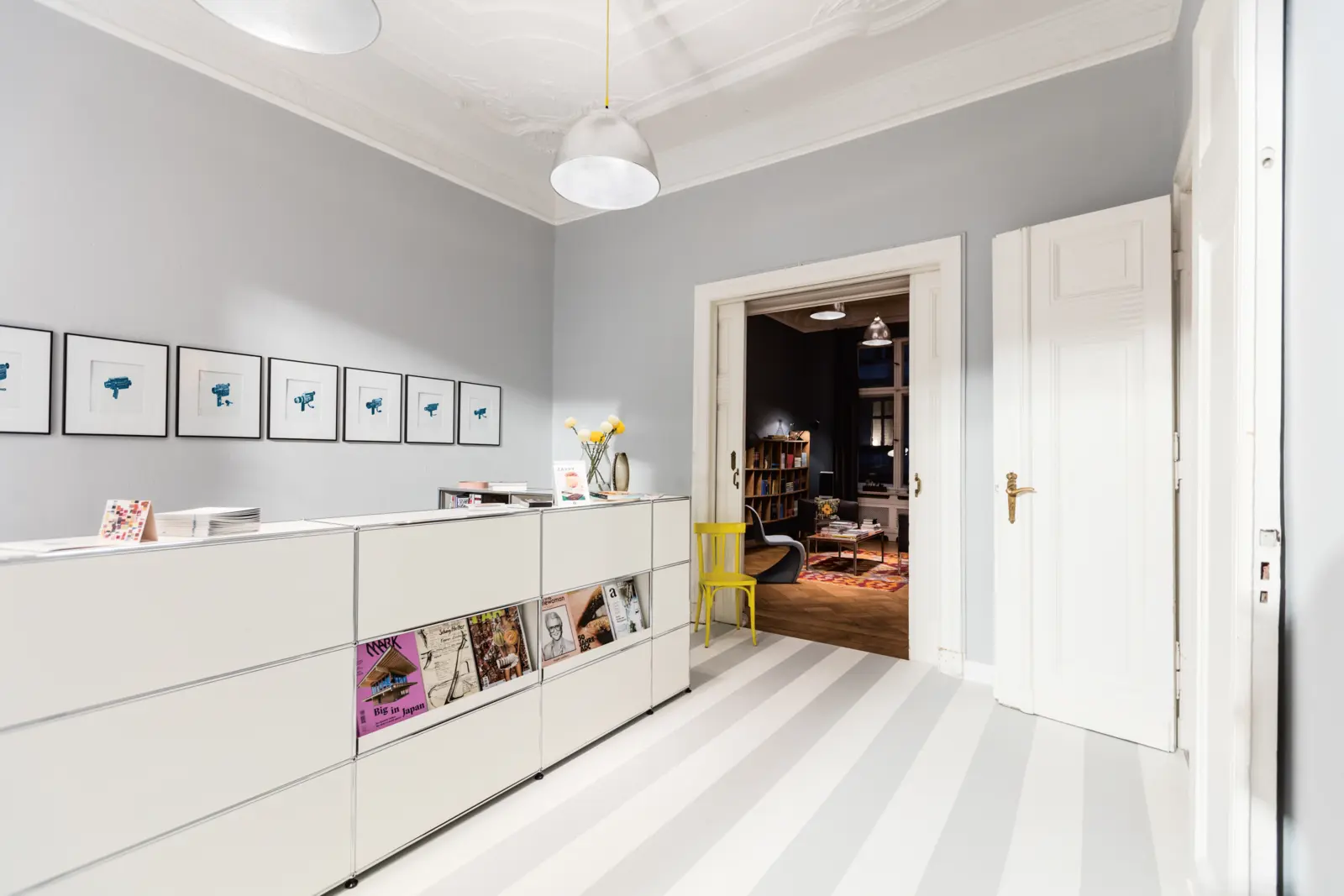
© USM Haller (usm.com)
Her Home, Reconfigured
Katharina grew up with a grandmother, Oma Maria, who loved rearranging things. On Sunday afternoons they would move the furniture in her childhood bedroom, repaint a wall, change the curtains. It left her with a particular relationship to her home. Not as something fixed, but as something in permanent conversation with whoever lives in it.
She lives cleanly and modernly, she says, and travels enough for work that her home matters in a specific way when she returns. "When you're away frequently, it needs to really function the way you want it to. It's your habitat."
IKEA is gradually moving out. Design pieces are moving in. Deliberately, carefully. A vintage Vitra Lobby Chair, inherited from a previous tenant, which she treats as a kind of indirect heirloom. A modular sofa from B&B that she loves partly for the same reason she loves USM: it can be reconfigured. When she moved last year, part of what had been a wardrobe became part of a kitchen unit. Same steel, different life.
Her mother jokes that one more USM piece and she'll be living in a showroom. Katharina doesn't entirely disagree. But she also knows what she doesn't want: to live like a furniture catalogue. There needs to be something personal. A meaningful vase, a photograph, something that has nothing to do with design and everything to do with the person who chose it. "The mix is everything," she says. "What I know for certain is that I don't tend toward kitsch."
Katharina Janku is Co-CEO of USM Germany and Global Head of HR at the USM Group. USM Haller celebrates its 60th anniversary in 2025. This conversation was part of the HOMEISSUE Podcast, hosted by Alena Gröfler. Listen to the German episode