Magdalena Wöckinger has built a career on dismantling the myth that good design must be expensive. With over half a million followers across social media, the Austrian interior designer and DIY creator has become known for transforming everyday materials into thoughtful, design-forward interiors. What began in a modest student apartment evolved into a dual career: on one side, highly produced digital tutorials that demystify design; on the other, a professional interior design practice serving private residences and commercial spaces alike.
Her approach is grounded in creativity, resourcefulness, and a deep understanding of spatial psychology. Whether she is upcycling flat-pack materials into sculptural lighting or guiding a full-scale renovation, Wöckinger moves fluidly between hands-on experimentation and strategic planning.
We spoke with her about growth, authorship, business intuition, and what truly defines a home.
Alena: If we were to look at your weekly routine, how often does a place like IKEA actually factor into your creative process?
Magdalena: About once a week, on average. Not necessarily to buy finished furniture, but to source materials. For me it’s less about what something is and more about what it could become. IKEA is simply a very accessible starting point for that transformation.
© Magdalena Wöckinger
Alena: Nearly half a million people follow your work. What do you think draws such a large audience to your approach?
Magdalena: Accessibility. I show that design doesn’t have to be unattainable. I recreate designer looks on a budget, highlight secondhand finds, and demonstrate how to transform what you already own. People relate to that.
Alena: Your growth accelerated significantly with short-form video. Did you anticipate that shift?
Magdalena: Not at all. I started blogging in 2016 and moved to Instagram in 2018. For years, growth was slow and steady. When Reels launched, everything changed. The format allowed my content to travel further and faster.
Alena: At what point did this move from passion project to profession?
Magdalena: It happened organically. I renovated my first apartment because I wanted to live beautifully, even as a student with limited funds. Friends began asking for help. Then people from my community started asking if I could design their spaces professionally. That’s when I realized this could become a business.
Alena: Today you operate both as a creator and as a professional interior designer. How do those two roles differ?
Magdalena: On Instagram, I focus on empowerment. I show people how to do things themselves. Interior design, however, is a structured service. I don’t build furniture for clients. I plan spaces, coordinate trades, create moodboards and 3D visualizations, and guide renovation processes. It’s strategic and highly organized.
Alena: Interestingly, you studied online marketing with a focus on SEO. Does your digital expertise support your interior design business?
Magdalena: Absolutely. Most of my interior clients find me through Google rather than Instagram. My website is optimized, and that visibility matters. Instagram and my design studio actually speak to slightly different audiences.
Alena: You chose to pursue formal interior design training, despite already having years of experience. Why?
Magdalena: Intuition is important in design, but I wanted to understand the theory behind it. Why a color enlarges a space. Why certain lighting placements work better. I also wanted to communicate my ideas visually. I can see a finished space in my mind very clearly, but clients often cannot. Learning to create professional visualizations changed everything.
Alena: You work across residential and commercial spaces. Where do you find more creative freedom?
Magdalena: Commercial projects often allow more boldness. People are willing to take risks. In private homes, clients are sometimes more cautious because they live there daily. But homes are deeply emotional. Seeing a client walk into their finished space and truly feel at home is incredibly rewarding.
Alena: When developing a concept, where do you begin?
Magdalena: Always with conversation. I want to understand how people live, what they need, how the architecture influences possibilities. Then I create moodboards. Even if clients send completely different inspirations, I find the common thread and build a cohesive concept around it.
Alena: Your own home has evolved stylistically over time. How would you describe the way you live today?
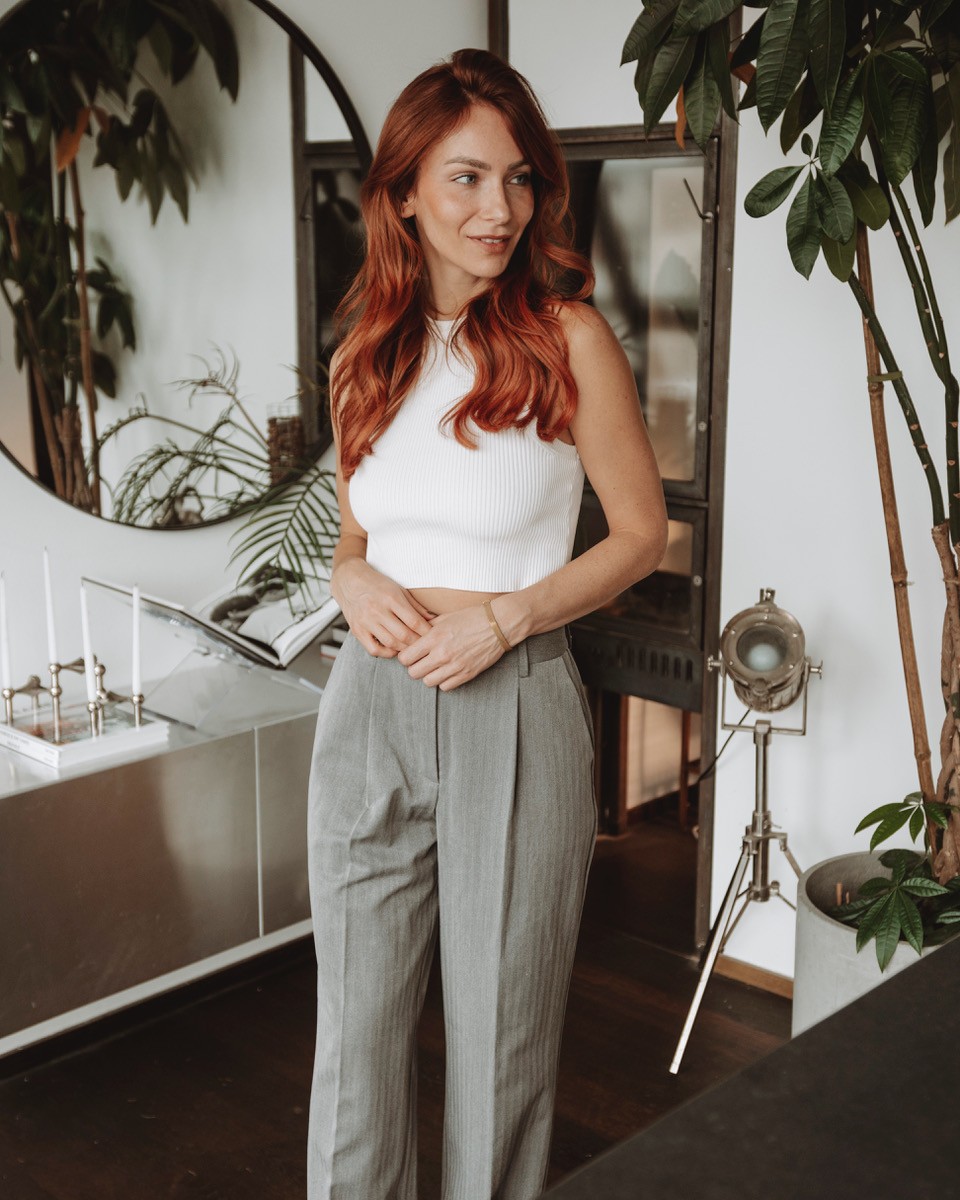
Magdalena: I always respond to the architecture. In my previous old building apartment, I worked with lighter materials and classic elements. Now I live in a loft-like new build with dark floors and steel details, so my style has shifted toward a more industrial direction. Materials matter. I don’t force a style onto a space; I work with what’s already there.
Alena: What defines “home” for you beyond aesthetics?
Magdalena: It’s a feeling. You walk in and you know. That sense of arrival matters more than perfect design details. And personality is crucial. I used to love when people said my home looked like a magazine. Now I prefer when it feels lived in. Travel pieces, personal objects, stories. A home should reflect its inhabitants.
Alena: You champion longevity and upcycling in an era dominated by fast trends. How do you approach interior trends personally?
Magdalena: Trends are cyclical. They return. I think it’s fine to interpret them through smaller elements, textiles, accents, details. But I believe in building a timeless base and layering trends carefully. I want people to love their spaces years from now, not just this season.
Alena: Social media has accelerated everything in design. Has that changed how people relate to their homes?
Magdalena: Definitely. We see more, faster. It creates pressure to constantly update. That’s why I focus on rearranging what I already have. Move furniture. Adjust lighting. Restyle a shelf. You can create novelty without constant consumption.
Alena: For someone with limited space and budget, what is the single most transformative change they can make?
Magdalena: Lighting. Always lighting. I work in layers. A main light source, then functional zone lighting like floor or table lamps, then accent lighting to highlight art or architectural details, and finally mood lighting such as candles. Layered lighting changes the entire atmosphere without changing the furniture.
Alena: You’re also launching a new creative platform. What can you share?
Magdalena: I’m building a screen-free booking platform called Offline with three partners. It will bring together workshops across DIY, cooking, movement, and more. The idea is to reconnect people with hands-on creativity. We’re currently in beta and launching next year.
Alena: You seem to operate on endless creative energy. What drives you?
Magdalena: Passion. I worked in a corporate environment before and felt completely drained. Now, even though I work a lot, it doesn’t feel like work. It feels like building something meaningful.
Alena: Magdalena, thank you.
Magdalena: Thank you. It was a pleasure.